Ceramic、Steel
Variable dimensions
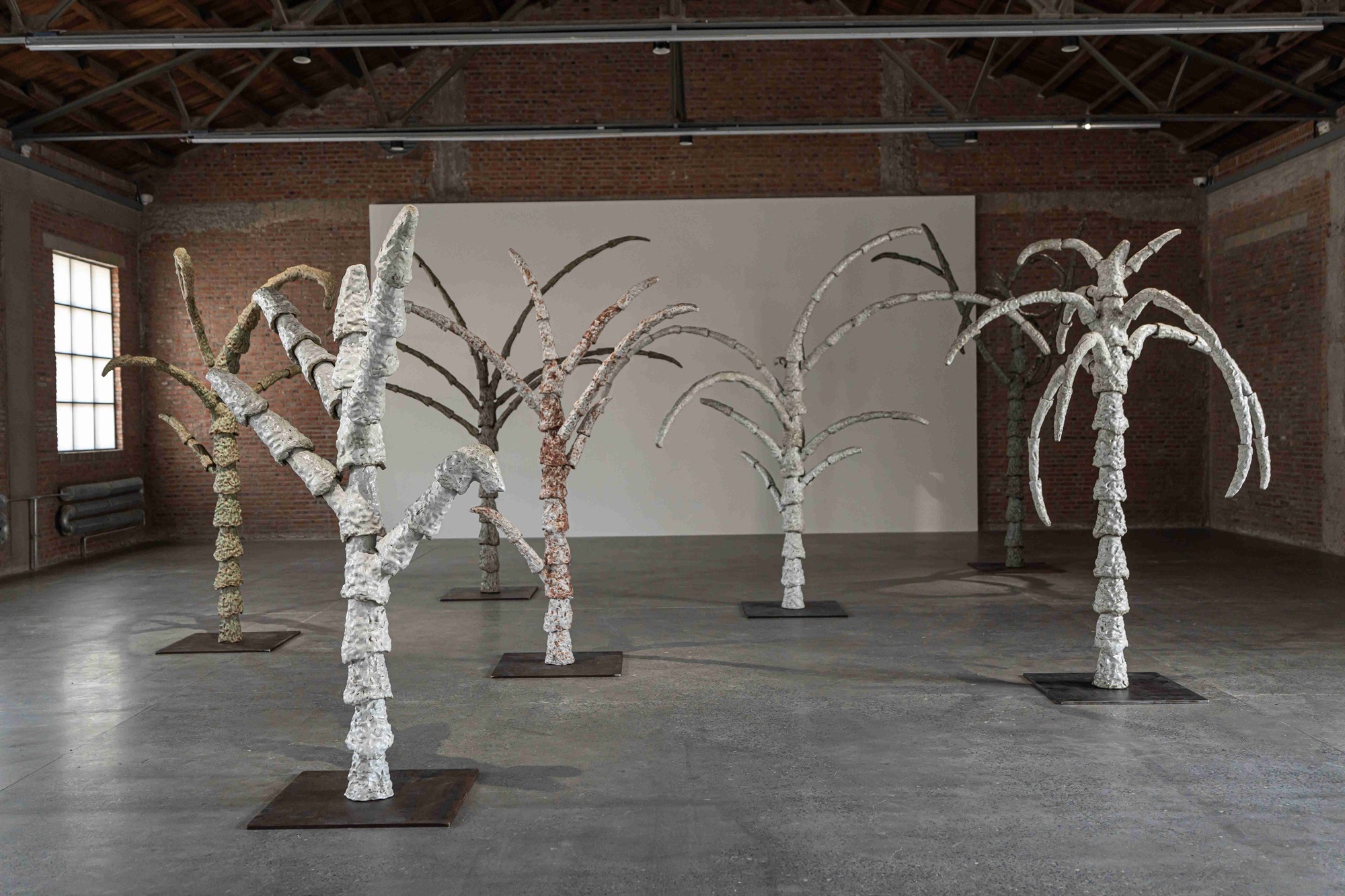
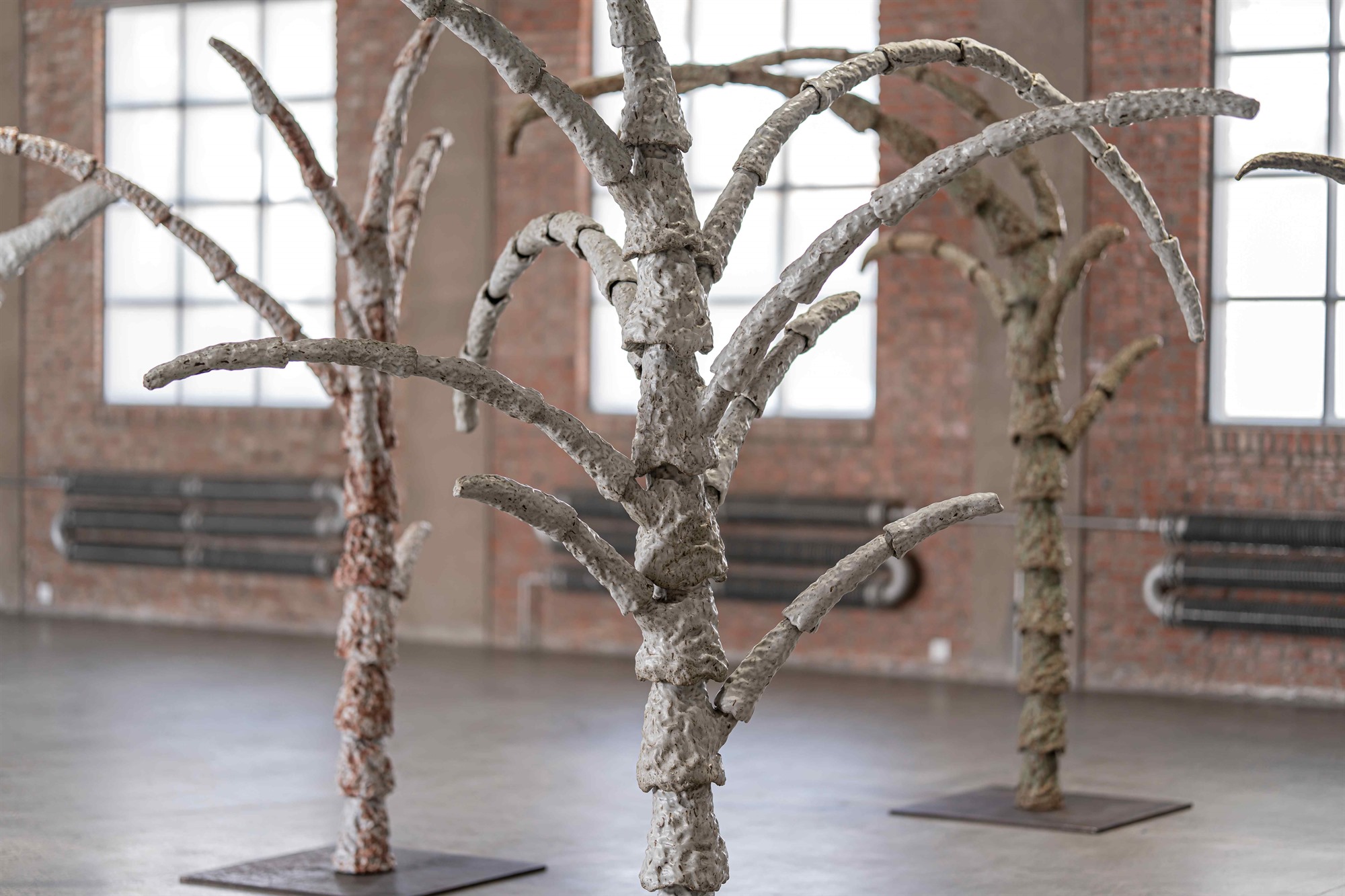


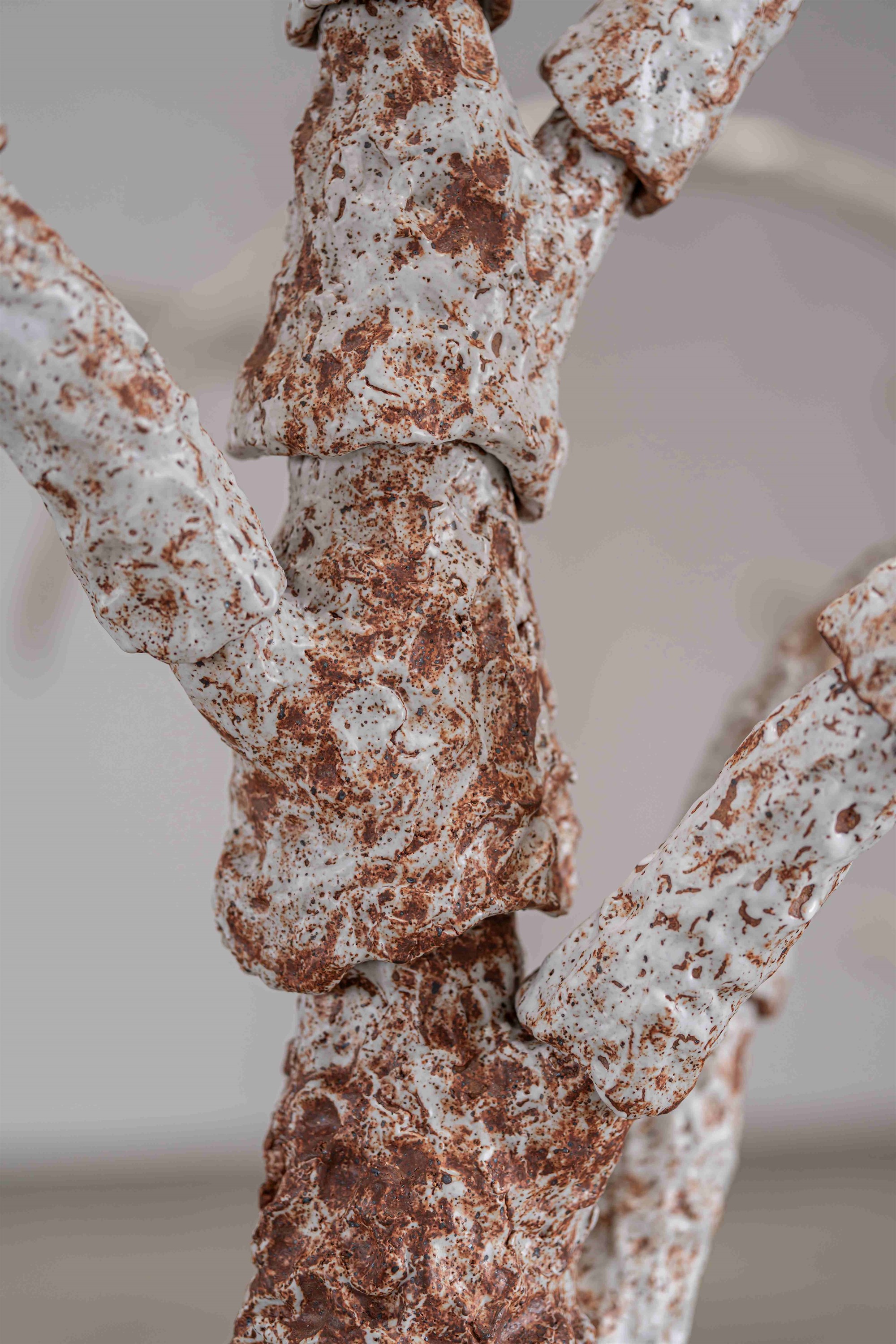
In Temperature, Liu Jianhua experiments for the first time with combining refractory and ceramic clays. This fusion evokes a powerful sense of rawness, heightening the material’s essential “clay-ness” and unlocking expansive sculptural potential. The remarkable plasticity of the blended medium allows the artist to explore form with heightened fidelity and expressive freedom.
The creative process here is an improvisational act—an intimate dialogue between hand and material. Through direct touch and shaping, Liu accentuates the clay’s rough textures and primal surfaces. The medium’s inherent wildness and almost combustible vitality are translated into works charged with tension. Form emerges not solely from artistic intention, but also from the material’s own qualities, which become a kind of narrative voice in themselves.
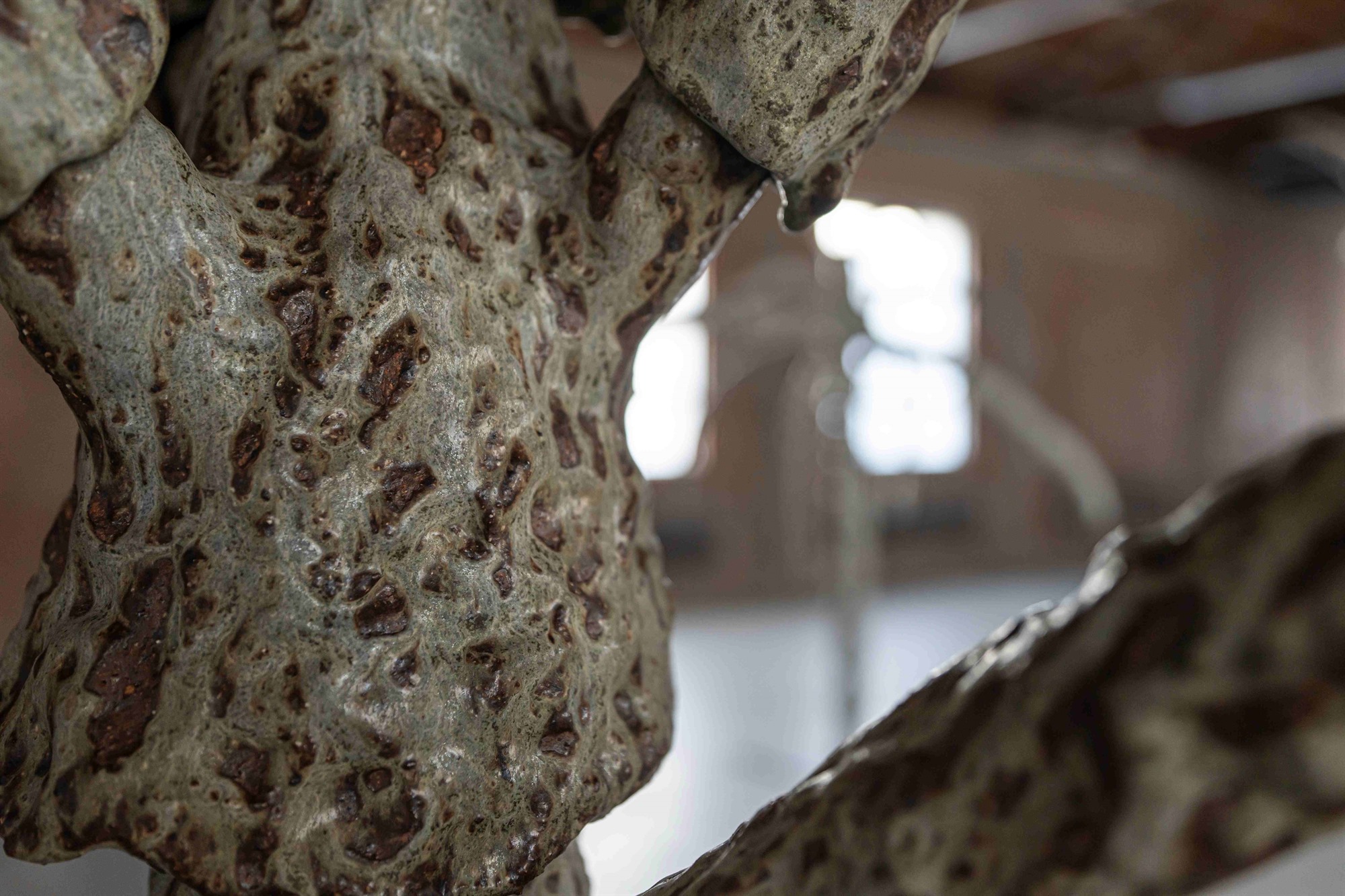
Rather than aspiring toward refinement, completion, and delicacy, every form is hand-built to embrace spontaneity. The immediacy of finger traces and ever-shifting, affectionate, gesture remain visible on the surface, resulting in forms shaped by uncertainty. Such uncertainty is the most authentic of material and things “connecting” and “interacting” with one another. There is a subtle interaction between matter, object, and viewer that challenges habitual ways of seeing and perceiving. It is an experience that overturns conventional conceptions of ceramic practice. It invites viewers into a primal emotional state, prompting an experience guided by pure intuition and sparking the imagination.
In the application of glaze, Liu strikes a balance between control and chance. He treats the application of glaze as a form of abstract painting on a three-dimensional surface, using tactile, spontaneous gestures. This process is filled with unexpected outcomes, charged with excitement. Each piece must then endure the ordeal of firing at approximately 1325°C. The volatile transformation brought by the kiln fire is the final and most uncontrollable stage, like the experience of opening a blind box.
It is this deliberate embrace of uncertainty, from shaping through firing, rather than a pursuit of precision and absoluteness, that ultimately infuses endless surprise and possibility to Liu’s practice.